
When the packing line needs single sausages, a connected pair from the cutter is an immediate reject. Finding its cause starts at the unseparated neck. The machine may still be set to separate groups, or a connection that should have been severed may remain between the links. There is also a simpler possibility: two fully separated sausages have landed against each other on the discharge. Collect the pieces where finished output can be handled safely. A whole neck sends the check toward the grouping selection or a missed separation. A slit ending in a casing bridge shows an incomplete cut. Two loose links merely lying together send the check beyond the knife, toward discharge handling. The intended cut is between the links of an existing chain, with each filled sausage left whole.
Lay consecutive pieces on a clean surface in their discharge order. A heap in a collection tray loses the sequence that could explain why pairs are appearing.
A partly cut pair is useful while it is still joined. Pull it apart and the remaining strip tears, obscuring where the blade stopped cutting. Turn the connection over for photographs so that the slit and any bridge can both be seen. Such a bridge may break later as the sausages move to packaging. The place where a tear becomes visible can therefore be some distance downstream from the incomplete separation that caused it.
For a pair with no connecting casing, look farther along the discharge. They may roll together or overlap on a conveyor. Changing the cutter's group setting will not correct a pair formed after a successful cut. Check the actual connected units before diagnosing the machine from their arrangement in the tray.
Output seen | What the connection shows | First question |
Regular connected pairs | Neck between each pair appears intact | Is two-link grouping active? |
Occasional connected pairs | Partly cut neck or casing bridge | Did an intended separation remain incomplete? |
Irregular longer strings | Several necks remain connected | Which intended cuts are missing, and where? |
Two loose sausages together | No casing joins them | Did they come together after discharge? |
An unmarked neck still leaves a question open: was this connection outside the cut position, or was no cut made for it? The manufacturer's diagnostic checks are needed to tell those events apart.
Some sausage link cutters can leave two or more links joined deliberately. For those machines, a clean pair can be the correct output of the selected mode, even when the next packaging job requires singles.
Use the operating instructions to find the active cutting-pattern field. Read its label with the number: a screen showing “2” has little meaning until the operator knows whether it refers to links in a group, a quantity target, or something else. A production total, a target quantity, and a links-per-group selection can all show numbers while controlling or reporting different things.
Compare the selected pattern with a short sequence of physical output. Repeated pairs, each with an intact middle neck and separated outer ends, make a grouping selection worth checking first. Random pairs among singles call for closer examination of the individual failed connections. The regular pattern sends the operator to the grouping controls first; scattered failures send attention to the necks that were supposed to separate.
The sausage cutting equipment category helps identify the relevant equipment family. Settings and reset instructions must still come from the installed model's manual. A total count increasing on the screen does not establish that every link has been physically separated.

With single-link mode confirmed, place the failed pair between the pieces collected immediately before and after it. The surrounding cuts show whether one separation was lost or whether a longer part of the chain passed without separating.
A partly severed neck shows that cutting reached some of the connection. For a whole neck, the next question is whether the cutting action missed its position or never occurred for that connection. Watch the chain approach from a position outside the guards. A turn or bunch at the entrance, or a failure appearing just after a feed interruption, gives the subsequent machine check a specific event to follow.
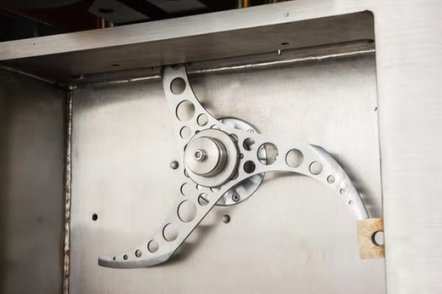
Blade condition belongs in this investigation, but increasing force or changing timing immediately can hide the original pattern. Inspection inside the knife and guide area belongs after safe isolation under the plant procedure. With isolation complete, qualified personnel can follow the manual through the assembly and cutting checks, looking for trapped casing or an incorrectly fitted part. A stuck pair must never be pulled out during operation, and the moving feed path must remain out of reach. Consult the documentation for the installed detection and counting arrangement before interpreting its signals.
After an authorized correction, run the same product under otherwise unchanged permitted conditions. Collect the corrected run separately and inspect it before releasing new production. Keep the earlier failed output on hold for disposition under the plant procedure. Keep the casing and product unchanged for this check. If another product must be tried, label it as a different run; otherwise improvement could come from the new casing rather than the correction.
A pair at the end of a chain has a different context from a pair halfway through it. The remaining section may already be broken or may contain fewer links than the group selected on the controls. Keep those pieces separate from the succession collected during uninterrupted feeding.
The supplier needs to explain what the installed controls do when the next chain enters or feeding pauses with a group unfinished. Check that explanation against the selected mode and software version. Before using reset, find out whether it clears a production total or affects the grouping sequence. Resetting an unexplained number can remove the very mismatch being investigated.
Collect the first pieces after a routine restart beside a sequence made without stopping, both with singles selected. Where grouped production is also required, agree how incomplete end groups will be identified and handled. The plant's release checks should count the sausages within connected units, as well as examine the separation points. A correct overall quantity can conceal an unacceptable mixture of singles and pairs.
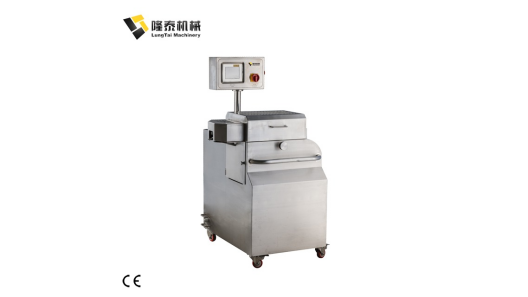
The Sausage Cutter LJC01 offered by LungTai Machinery (Jiaxing) Co., Ltd. separates sausage links. The official description lists a PLC, touchscreen, output counting, and a choice of singles or connected groups. For a plant requiring singles, buyers should ask the supplier to demonstrate the active single-link setting on their own sausage chain and explain what the displayed count represents, including behavior at normal restarts and chain ends. Send the casing, link dimensions, intended output pattern, and photographs of any connected pairs through the technical contact page. The published grouping options establish a function to discuss; they do not explain the installed counter logic or replace a product trial.
Start with the connection between the sausages. Regular intact pairs warrant a check of the active grouping mode; a partly cut neck warrants examination of the failed separation; loose pieces lying together lead downstream. Preserve the output sequence, distinguish chain ends and restarts from steady feeding, and use the documented procedure for any inspection or correction. Confirm success from physically separated links, rather than from a running machine or an increasing total alone.
No. A grouped-cutting mode can intentionally leave the middle connection intact. Confirm the selected pattern and inspect the neck before investigating blade condition.
Yes. That depends on what the machine counts. A displayed total and the number of physically separated sausages are different checks until their relationship has been verified.
Keep it intact for inspection and handle held output under the plant procedure. Pulling it apart destroys the casing bridge that helps locate the incomplete cut. Never pull product from a running cutter.
Do you need more
information?
You are welcome to contact us for further information about our company or products by filling in the form below.
Email: sales@lungtai.com
