

An automatic sausage peeler strips inedible casing from cooked or otherwise prepared sausage products before counting, cutting, packing or other downstream step. The problem with processors is not so much if the casing comes off, but if it comes off repeatedly without tearing the surface of the sausage, leaving casing fragments or disrupting the line flow. An automatic sausage peeler must match the product diameter, casing condition, surface moisture, operating speed and sanitation requirements to be suitable. The question is whether these factors contribute to stable production or whether they are a source of stoppages and rework.
Manual peeling can be used during product trials or for limited production, especially when operators are working with one sausage size only. But as output increases, the process becomes harder to control, as each product needs to be fed, opened, separated from its casing, and transferred without damage.
Sausage that is not peeled well may have small strips of casing left on the surface or near the ends. Such defects may require further inspection and may interfere with subsequent cutting or packaging. Overly high peeling force can also scrape, split or deform the product, reducing visual consistency in retail or food-service packs.
The casing is only part of the picture. The material's ease of separation is affected by product firmness, surface moisture, cooling condition, diameter variation, and casing adhesion. So a processor should look at the overall product condition and not judge the peeler solely on speed.
Manual casing removal relies on operator technique and concentration. Results may vary across shifts, particularly when employees handle wet products, delicate surfaces, or long production runs. Repetitive work can also slow the line when the upstream cooking or filling process operates at a higher rate.
Automation changes the operator’s task. Instead of peeling every sausage, the operator manages feeding, settings, inspection, and minor adjustments. This can make workflow more repeatable, although trained supervision is still required.
Although machine layouts differ, the basic operating logic is straightforward: the sausage enters the machine, the casing is opened, the casing is separated from the product, and both materials leave through their assigned discharge paths. The quality of each step affects the next one.
The feed system positions the sausages in a controlled manner to ensure that they reach the peeling mechanism in a stable position. Depending on the design of the machine and the format of the product, guides, rollers, belts or similar handling components may be used. Uneven feeding can cause rotation, overlapping or angled entry of sausages increasing the risk of missed casing or surface damage.
The casing is then slit or opened so that it can be pulled away.The opening mechanism must act on the casing without cutting deeply into the sausage. Correct adjustment depends on casing thickness, adhesion, product diameter, and surface condition, so setup should be completed with the actual production product.
After opening, the machine separates the casing through controlled mechanical movement, airflow, water assistance, vacuum, or a combination of methods, depending on its design. The removed casing is directed away from the product path while the peeled sausage continues to the next process.
Clean separation requires balance. Too little force may leave casing attached, while excessive force can mark or tear the sausage. Buyers should ask suppliers to explain the separation method, adjustment points, and conditions required for stable operation.
An automatic sausage peeler is generally intended for products made with removable casing, but not every sausage or casing behaves the same way. Suitability should be confirmed through a trial using the intended recipe, diameter, and processing conditions.
The thickness, strength and adhesion of the casing affect the ease of opening and removal. One casing that comes away easily from one filling may cling more tightly to another, due to differences in cooking, cooling, moisture, or surface texture.
The structure of the sausage is also important. A firm uniform product is less susceptible to mechanical handling than a soft product with a delicate surface. Coarse texture, uneven diameter, curved shape or weak ends may require slower operation or more adjustment.
A sausage that is too warm may be soft and easier to damage. A very cold product may behave differently during slitting and separation, particularly if the casing becomes stiff or adheres tightly. Surface water, oil, condensation, and residue can also affect grip and machine control.
Processors should define the product condition at the peeling stage, not only at the end of cooking. Consistent cooling and transfer practices often make peeler performance easier to maintain.
Maximum output is useful only when the stated conditions resemble actual production. A machine operating on uniform products under controlled test conditions may not deliver the same result with a processor’s full product range.
The peeler should accept product at a rate that fits the upstream process without creating accumulation or long idle periods. Buyers need to compare cooking output, cooling time, feeding method, peeling capacity, and downstream packing speed as one system.
Evaluation Item | Practical Buyer Question |
Product diameter range | Can the machine handle all planned sausage sizes? |
Feeding method | How are products aligned and separated before peeling? |
Peeling adjustment | Which settings change for different casings or products? |
Usable throughput | What speed is realistic for the buyer’s actual product? |
Changeover time | How much work is required between product formats? |
Cleaning access | Can operators reach casing-contact and residue areas? |
A balanced line usually delivers more reliable output than one fast machine surrounded by slower processes.
Specialty processors may run several diameters or recipes during one week. If changeover requires extensive disassembly or difficult recalibration, the machine may reduce flexibility even when it performs well on one product.
Cleaning access deserves the same attention as production speed. Casing fragments and product residue can collect around guides, blades, rollers, discharge points, and guards. Buyers should inspect how these areas are opened, removed, washed, checked, and reassembled.
Automatic equipment improves repeatability only when product conditions and machine settings remain controlled. Small changes in casing, temperature, alignment, or wear can gradually affect results.
Residual casing may result from an incomplete slit, weak separation force, poor product alignment, or casing that adheres more strongly than expected. Surface cuts can occur when the opening mechanism is set too aggressively or when diameter variation brings the product too close to the cutting point.
Jams often begin upstream. Products may arrive too close together, overlap during feeding, or enter with irregular spacing. Operators should diagnose the full sequence instead of adjusting peeling force immediately.
Routine inspection should include peeled surface condition, remaining casing, end quality, product deformation, and consistency over time. It is useful to check samples at startup, after changeovers, and whenever product temperature or casing supply changes.
Maintenance should focus on components that feed, guide, open, grip, or separate the casing. Wear, residue buildup, misalignment, or damaged contact surfaces can reduce peeling accuracy. Keeping records of recurring faults helps maintenance teams identify whether a problem comes from the machine, product, or process.
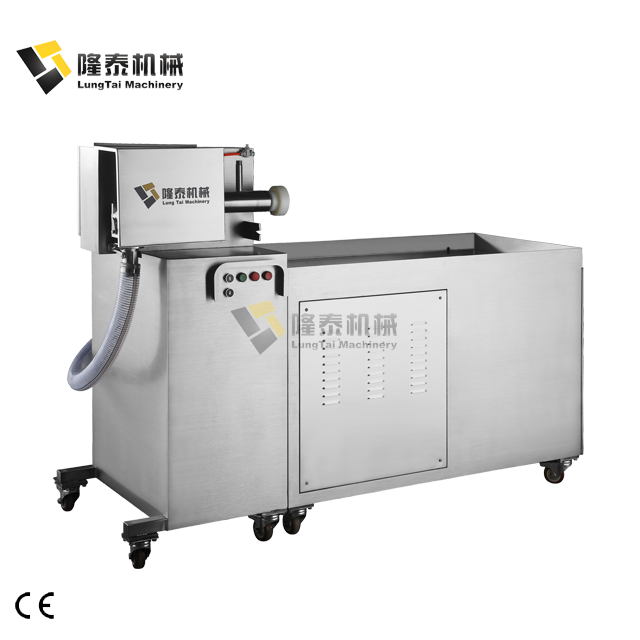
A supplier should be able to discuss product conditions in practical terms. General statements about output or compatibility are not enough for equipment that depends heavily on casing behavior and sausage condition.
A useful trial should use the buyer’s actual sausage, casing, diameter, temperature range, and target line speed. Buyers should observe casing removal, surface damage, product loss, feeding stability, startup waste, cleaning access, and adjustment time.
The trial should include more than a short successful run. Operators need to see how the equipment responds when products arrive unevenly, casing adhesion changes, or a minor jam occurs. These situations reveal how manageable the machine will be during routine production.
Buyers should confirm installation requirements, operating instructions, cleaning procedures, spare-parts availability, training, and technical response methods. They should also ask which wear components need routine replacement and what tools are required for adjustment.
Purchase cost is only one part of the decision. Changeover labor, cleaning time, product loss, spare parts, downtime, and operator training all influence the practical cost of ownership.
LungTai Machinery (Jiaxing) Co., Ltd. supplies sausage processing machinery for processors planning individual equipment purchases or broader production-line development. Its support can include discussions about product diameter, casing condition, expected output, feeding arrangements, peeling requirements, cleaning access, and downstream integration. Buyers can use these discussions to compare equipment configuration with their own sausage recipes and operating conditions before placing an order. Practical services may also include confirmation of specifications, coordination of delivery, operating communication, after-sales support. Nevertheless, buyers should review product trials, technical documentation, spare parts arrangements, commercial terms and service expectations before selecting a supplier.
An automatic sausage peeler works through one connected flow: controlled feeding, casing opening, casing separation, and product discharge. Reliable performance depends on matching that flow to the sausage diameter, casing behavior, temperature, surface condition, and required throughput. Buyers should pay close attention to usable speed, changeover effort, sanitation access, inspection methods, and supplier support. A real-product trial is one of the most useful ways to identify limitations before purchase. The right machine is one that removes casing consistently without creating unnecessary product damage or line disruption.
Some machines can handle multiple diameters, but the available range and required adjustments depend on the equipment design. Buyers should confirm each planned size during product trials.
Possible causes include incomplete casing opening, product misalignment, unsuitable settings, surface moisture, temperature variation, or stronger casing adhesion. The full process should be checked before changing one setting.
Provide sausage diameter, length, casing type, product condition, expected output, upstream feeding method, downstream process, cleaning requirements, and available installation space.
Capacity should be judged under the buyer’s real product and operating conditions. Maximum stated speed may not reflect actual throughput with delicate products, diameter variation, or frequent changeovers.
Cleaning frequency depends on production procedures and applicable hygiene requirements, but product-contact and casing-collection areas normally require regular cleaning and inspection. The supplier’s operating and sanitation instructions should be followed.
Do you need more
information?
You are welcome to contact us for further information about our company or products by filling in the form below.
Email: sales@lungtai.com
