

Automated peeling of sausages is used in various applications, such as sausage processing, frozen food factories, manufacturers of meat products and buyers of equipment for the meat processing industry. Automatic peeling of sausages can be a big time saver by eliminating much of the manual labor that is involved in peeling link sausages. However, to realize the full potential of a sausage peeler, the peeler must be matched to the product and properly maintained. A number of problems can occur with a sausage peeler, such as not removing the complete casing from the sausage, breaking the sausage, poor surface quality, problems with feeding the sausages into the peeler, wear of the blades, problems with moisture, and problems with cleaning the peeler. Troubleshooting a peeler should start before a problem actually occurs, by checking such as by checking the temperature of the sausages, the type of casing used, the steam or soaking conditions, the condition of the blades, the speed of the conveyor belt, the accessibility for cleaning, and the required training of the operators.
The automated peeling of sausages depends on a complex relationship between sausages, casings, moisture, the cutting system and the machine settings. Because of this sensitivity, even a small change in one of these components can generate visible defects downstream.
Peeling of sausages is influenced by several factors including sausage temperature, casing adhesion, surface moisture and product firmness. If sausages are too soft they may deform during peeling or break. On the other hand if the casing is too dry or too strongly bonded the peeling machine may leave fragments of casing on the peeled sausage.
In a cooked sausage line which goes from chill to peel before being sliced or packed, if the chill section is not consistent then the same sausage peeler setting will work on one batch and not on the next.
When setting up a peeler, factors such as feed alignment, machine speed, blade pressure, air or steam conditions and discharge control have to be taken into account. When linking sausages to the peeling zone unevenly, the peeler can either cut too deep into the sausage cover or fail to remove sections of the cover.
Capture operating settings per product size, casing type and batch condition to enable troubleshooting to be repeatable rather than ad-hoc.
Incomplete peeling is the most common problem with automated peeling of sausages. Incomplete peeling manifests itself in form of strips of casing, patches of unwrapped sausage surface or even whole ends of the sausage which have not been peeled.
Check the firmness of the sausages and assess the adhesion of the casing as well as the amount of steam or soaking used for preparation. According to LungTai’s WBP01 sausage peeler page, WBP01 supports steam peeling and soaking peeling. Hence, one should check the way one prepares the products against the facility and the products itself.
Just because one batch peeled well does not mean the next batch will until you compare batch temperature, casing supplier, storage time and surface moisture prior to making more major changes to your machine.
Slow appearing of incomplete peeling can be caused by wear of blades, dull cutting edges or by poor alignment of cutting equipment. Sudden appearance of incomplete peeling is usually caused by foreign material, product jam, loose parts or by wrong setting of last changes.
Don’t adjust blades while machine is energized at Food plants. OSHA lockout/tagout standard covers all servicing and maintenance activities where there is potential for unexpected start up or stored energy release that could cause serious injury or death.
Broken or damaged sausages cause losses, rework and complaints from customers. The causes can be mechanical but also originate from the product itself.
Sausages can be sensitive to soft texture and weak casing. They can suffer from poor chilling, irregular diameter, and high moisture content, making them more brittle. Delicate skins and small diameter sausages can be processed successfully by slower feeding, gentler handling and by alternative processing methods.
A practical application example for a manufacturing plant would be to change from producing regular hot dogs to producing a softer cheese filled sausage and the older setting may prove to be too aggressive for the new product form.
Check the following aspects after peeling: conveyor grip, guide rails, peeling blade depth, peeling speed, peeling discharge position, product accumulation. Even peeled sausages can be damaged when they fall too far or hit on a hard surface.
As long shifts continue, breakages may increase. Check if parts are getting hot, are vibrating or are clogging with residue. A simple cleaning stop could solve what seems to be a mechanical problem.
Food equipment problems are more than just mechanical failure. Leftover residue in cutting, feeding areas and under equipment can affect sanitation as well as how equipment and products look.
FDA 21 CFR 117.40 Equipment & utensils shall be designed and constructed to enable thorough cleaning of all surfaces to preclude contamination, cross contamination of allergens and to prevent adulteration of food including but not limited to contamination from lubricants, fuel, metal fragments, contaminated water, etc.
Items to check when purchasing equipment for sausage peeling are: access to tooling, drainage, removable covers, smooth surface finish and ability to inspect residue points after cleaning.
Residue can accumulate on surfaces of blade, roller, guide, sensor and discharge area and could cause problem such as unstable feeding, casing buildup, product drag, poor cutting, and bad odor etc.
A practical checklist may include:
l Check blades and guides after each shift
l Remove casing residue from feeding areas
l Inspect drainage and water collection points
l Confirm food-grade lubricant use where required
l Record cleaning frequency and problem patterns
l Train operators not to bypass guards during cleaning
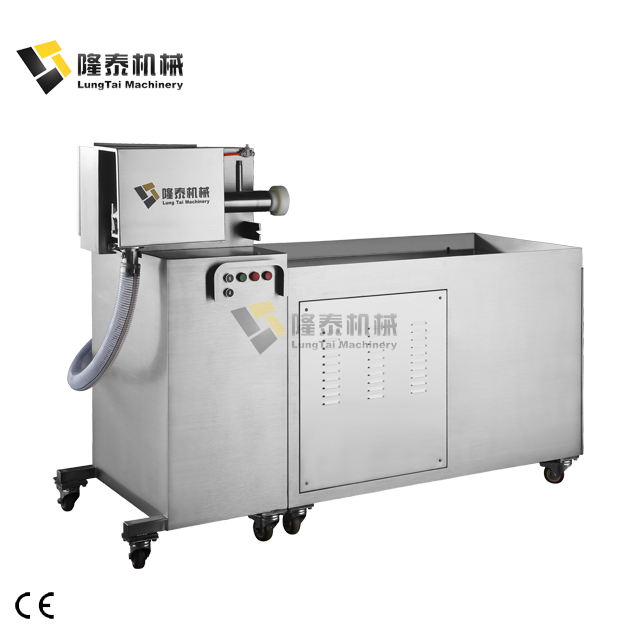
The best troubleshooting plan starts with the best equipment selection plan. The buyer must compare the sausage peeling machine he is buying with other similar products offered on the market. Simply checking the catalog capacity of the product is not enough.
Buyers should test actual sausage diameter, casing material, product temperature, peeling preparation method, target speed, and downstream handling. They should inspect peeled appearance, casing removal, breakage rate qualitatively, cleaning access, and changeover time.
Supplier trials for automated peeling should include a mix of normal items and tricky ones. This allows the buyer to see how the item performs at the limits of the machines operating capabilities.
Here is a list of potentially useful documents to produce for your machine: machine specifications, layout drawings, electrical requirements, cleaning etc, parts list, instructions for replacing blades, safety information, maintenance schedules.
It is also important to clarify issues like operator training, remote support, availability of spare blades, lead time for delivery of new blades and adequate after-sales service. Good documentation can prevent down time caused by problems that only appear months after commissioning of the machine.
LungTai Machinery (Jiaxing) Co., Ltd. presents itself through its website as a sausage processing machinery supplier with products covering sausage peeling, tying, cutting, filling, and related processing equipment. Its public sausage peeler page describes the WBP01 model as supporting steam peeling and soaking peeling, with operation and maintenance features presented for factory use. For buyers troubleshooting automated peeling or comparing sausage peeler options, this product scope may support discussions around machine selection, product testing, line layout, spare parts, cleaning access, and operator training.
Troubleshooting problems on automated sausage peeling lines requires a total view of the process. This means taking into account the properties of the products, the behavior of casings, the type of preparation, the condition of the cutting blades, the way in which the sausage is fed into the machine, the cleaning and maintenance work, as well as the skills of the operator. Most problems on sausage peeling lines have several possible causes. That is why buyers should test some of the products before purchasing the machine and keep a record of the tests after the machine has been installed. A reliable automated peeling line not only requires the correct choice of machine, but also the maintenance of the machine and its components in a disciplined fashion, as well as safe service procedures and good support from the supplier.
Some common causes for difficult peeling are bad product preparation, tight casing adhesion, wrong temperature, worn blades, instable feeding, wrong amount of steam or soaking time.
Breakage could be due to a number of reasons including the soft texture of the product, poor chilling, wrong blade setting, running the blender at too high a speed, incorrect guide setting, or rough discharge.
It is wise to check blades in accordance with the supplier’s maintenance program. But you must also take account of the particular circumstances of your plant. For example, very abrasive casings or long running shifts are likely to need more frequent checks.
They should test actual product size, casing type, temperature, method of preparation, target processing speed, peeled appearance, potential for breakage and ease of cleaning.
Yes. Casing residue, grease, moisture or other types of buildup around the blades and guides can affect the machine’s ability to feed, cut and peel as well as the overall hygiene performance of the machine.
Do you need more
information?
You are welcome to contact us for further information about our company or products by filling in the form below.
Email: sales@lungtai.com
