

Sausage production is a complex process that blends food science, mechanical engineering, and craftsmanship. From selecting raw meat to packaging the final product, each stage involves precise control of temperature, texture, and hygiene. According to the Food and Agriculture Organization (FAO), global sausage production exceeds 15 million tons annually, driven by both artisanal producers and industrial-scale manufacturers. This article explores how sausages are made step by step, focusing on the equipment, techniques, and quality control measures used in modern facilities.
The sausage manufacturing process is developed to produce safe and consistent products in the most efficient manner.
Quality starts with selecting fresh or frozen meat with the right proportions of fat to lean meat, for most recipes this would be approximately 70% fat and 30% lean meat, which is why pork is by far the most popular type of meat worldwide. Depending on local markets other meats such as beef and poultry are also often used. Trimming of connective tissue and excess fat in meat is crucial to achieve the right texture. Trimming is done on an industrial scale using automated trimming lines that are able to cut meat to precise dimensions and in large quantities in order to keep costs low and avoid waste.
After cutting and processing the raw meat, it is ground in industrial grinders into uniform particles. In the mixing step that follows, all seasonings and also all curing agents are distributed homogeneously. The main component of meat, protein, consists of myofibrillar proteins that can be activated by salt. As a result, meat has the ability to bind water and fat very well, thus creating a very cohesive meat texture. In the mixing step, ice or even better chilled water is added to the meat mixture in order to prevent temperature rise, which could affect the properties of the proteins. In order to prevent the meat from becoming tough due to overmixing, the time and speed of mixing is monitored in detail by means of a programmable control system.
The finely textured types of sausage, for example Frankfurters and Bologna, are also processed after grinding by emulsification. The raw material mixture is emulsified in high-speed bowl cutters at low temperatures. Subsequently the emulsified meat paste is filled into sausage casings, either natural (from animal intestines) or synthetic (collagen, cellulose etc.). The filled sausages are cut by automatic linking machines to the desired length and then processed in the following cooking or smoking plant.
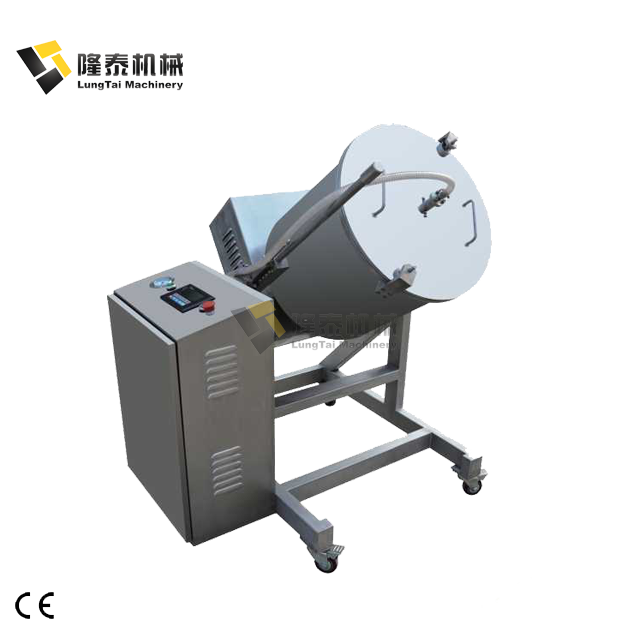
The most modern sausage processing equipment is the key to a high quantity of production without compromising the quality.
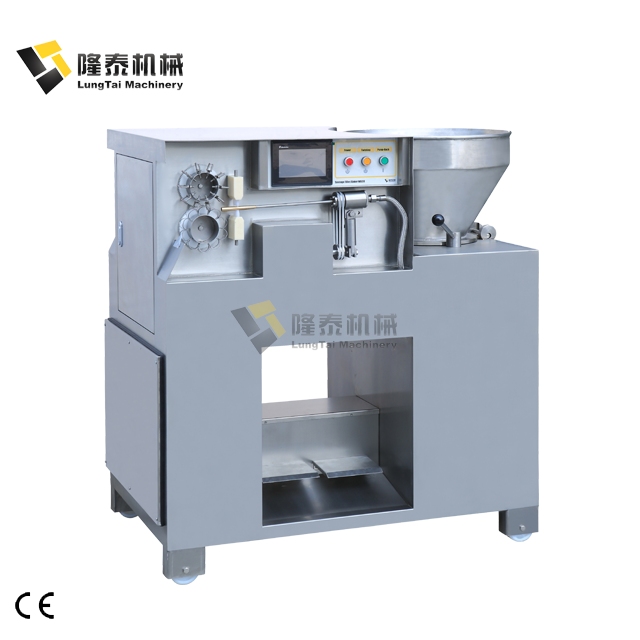
Processing production lines have been designed to integrate several automated functions: grinding, mixing, stuffing and clipping. In comparison to manual processing, the advantages of fully automatic production lines are the high throughput and the better hygiene, as all stainless steel parts are easy to clean and correspond to the requirements of HACCP. With an industrial sausage making machine for example 200 to 500 kg per hour can be processed with very little supervision.
Efficient motors can make a saving of up to 20% on the running costs of a meat processing plant according to the European Meat Processing Association (EMPA). Many of the more modern sites around the world have moved to predictive maintenance using sensor diagnostics to detect potential failures before they actually occur. By specifying modular equipment the greatest benefit can be achieved in terms of rapid replacement of worn parts should required. Sites running 24/7 and incurring penalty rates for downtime can especially benefit from such design approaches.
Control of temperature is the key parameter influencing every step of the sausage manufacturing process, since texture and safety with respect to microorganisms are affected by temperature.
Maintaining low temperatures during grinding and mixing prevents bacterial proliferation while preserving color stability in red meats through controlled myoglobin oxidation. Many factories use continuous monitoring systems linked with ISO 22000-compliant traceability software that logs temperature data automatically for audit purposes. Even slight deviations can trigger corrective actions such as batch re-cooling or reprocessing.
The cooking process is used to transform raw emulsions into stable food products. Most emulsion food products are denatured by heat at temperatures around 70°C (158°F) by proteins. In addition to cooking, food products can be given a smoky flavor. This not only gives the product a more complex taste, but also a surface layer that protects against the growth of microbes. Large quantities of food can be cooked uniformly using continuous cookers or by steaming in a steam oven. After thermal processing, the food products are cooled as quickly as possible in cooling tunnels to achieve core temperatures of below 5°C as soon as possible in order to prevent overcooking and contamination during storage in packaging.
The quality assurance for our products is done by combining microbiological tests with sensory evaluation. So we can check if the product is safe for consumption and also if it is acceptable for the customers.
Where relevant, routine swab tests are carried out to test for pathogens such as Listeria monocytogenes and/or Salmonella spp. Examples of areas tested for such product include the conveyor belts and the filler nozzles where product residues could potentially accumulate. In addition, most processing areas are subject to automated cleaning-in-place (CIP) which allows the internal surfaces of plant to be cleaned and then sanitized on a regular basis between shifts without the need for staff to take apart any of the processing plant. Staff are fully trained to recognize potential sources of cross-contamination whilst undertaking work in all areas of the processing zones.
Sensory panels are trained to assess specific aspects of new products prior to launch, against reference samples measuring attributes such as firmness and juiciness, aroma and spice intensity. We use rheological instruments to measure the elasticity of the product by carrying out compression tests, which can be correlated to the product’s ‘bite’ or ‘chew’ and its perceived strength. This allows us to check consistently that products are meeting the brand’s standards and ensure that they are being launched in all markets to a consistent quality.
Packaging technology has a direct impact on the shelf life of sausage products, ensuring that they remain safe to eat and of good eating quality after leaving the production floor.
Vacuum packing removes oxygen from the food to slow down oxidation of lipids which cause rancidity and off-taste and odor. Modified atmosphere packing (MAP) extends the shelf life of packed food by replacing the air in the pack space with inert gases like nitrogen and/or carbon dioxide which are not utilized by spoilage organisms and thus prevent their growth and development. Multilayer transparent packaging films enable the customers to check the products visually, and at the same time prevent moisture loss from the food.
Post packaging products are typically stored in chilled conditions to ensure the products are kept at safe temperatures prior to long distance transport. To efficiently move products through the logistics network, products are moved in temperature controlled vehicles that are equipped with sensors that allow real time tracking of products in transit. Logisticians use this information to plan the best route in advance and to make adjustments as necessary based on changing conditions to get products to stores in the freshest condition possible.
LungTai Machinery (Jiaxing) Co., Ltd. is a highly reputable machinery manufacturer from Asia providing high quality sausage processing machinery to countries in Asia and Europe. The product range consists of meat mixers, fillers, cutters and linking machines. From small artisan type producers that require an automated mix and fill process to large industrial meat processing plants producing tons of sausage daily, LungTai Machinery (Jiaxing) Co., Ltd. provide a wide range of machinery solutions and also supports customers after a machine has been installed, with on site operator training, a comprehensive spare parts service with global logistics, plus technical advice and service on how to make production more energy efficient to meet todays meat processing industry green objectives.
Sausage manufacturing combines traditional craftsmanship with advanced engineering disciplines to deliver flavorful products safely at scale. Every stage—from raw material preparation through cooking—demands strict coordination between skilled personnel and dependable machinery systems like those found in today’s automated facilities. As global demand rises roughly 3% annually according to the Global Meat Market Report 2023, investment in efficient sausage processing equipment represents not just modernization but long-term competitiveness through reduced waste and consistent quality performance across diverse markets.
In industrial production of sausages, the most common type of meat used is pork. It has a good balance of fat and lean, which makes it ideal for creating links and for flavor binding. In addition to pork, also chicken and beef are widely used in processing of sausages. The most common type of meat depends on the market and local consumption.
A complete production cycle will vary from 2 hours up to 6 hours depending on the complexity of the recipe and the size of the equipment being used on the production line.
Yes, they can. Most of the modern modular designs have been developed for small-scale processors. These enable them to make use of the high performance of industrial processing equipment without the space and maintenance requirements of a full-scale processing plant.
Shelf stability depends primarily on storage temperature control consistency combined with oxygen exclusion effectiveness achieved via vacuum sealing or MAP technologies plus preservative formulation accuracy during blending stages.
Preventive maintenance every few weeks and annual checks. The frequency depends on the volume, intensity and the number of hours the line is in operation per day.
Do you need more
information?
You are welcome to contact us for further information about our company or products by filling in the form below.
Email: sales@lungtai.com
