

Global meat processing is undergoing change as automation is increasingly recognized as the way forward in delivering consistent quality, increased hygiene and greater output. By removing the need for human intervention between filling and tying a number of processing tasks can be more quickly and efficiently completed. Introducing a vacuum sausage filler to automatic sausage tying equipment can significantly increase processing power and improve efficiency. Indeed according to the Global Meat Processing Equipment Market Report 2023 integrated systems are set to deliver increased processing efficiency of up to 25% making them a very sound investment for all meat processors. This article provides a ‘hands-on’ guide to connecting a vacuum sausage filler to an automatic tying machine. Importantly it also sets out the key considerations in terms of mechanical compatibility, achieving correct synchronization of the filling and tying process, together with identifying the critical points which require to be serviced/maintained to maximize operational life.
Before we jump into the technical details on how we can support your production line, it’s probably a good idea to outline the reasons why we believe integration of automated systems is so important in today’s sausage manufacturing environments.
Connecting a vacuum filler to a tying unit makes process more efficient by reducing time spent on moving products between filling, linking and tying. A vacuum filler with a tying unit enables to portion out products consistently and accurately. Thus, every sausage is of same length and weight which is important for their appearance on the plate as well as for packaging them automatically. The main advantage of linking filling and tying process is significant reduction of manual labor as there is no need for manual tying of products by clipping or twisting. Also, this solution is more hygienic as it significantly reduces direct contact of production staff with raw materials.
In operation the filler and tying machine are continuously fed and thus production is not interrupted by batches. Depending on the version integrated systems reach production rates of up to 1200 pieces/minute. In a European plant study the integrated filling and tying system led to a saving of casing waste of 12 % in more than 300 production hours. This also translates into a higher production and thus in more yield and income. This is reached in a shorter period than with separate machines thus creating a better ROI.
The successful connection of a vacuum sausage filler with an automatic tying machine is based on precise mechanical and control related aspects.
Step 1: Check the alignment of the nozzle diameter on the filling system outlet and on the tying unit inlet. Any misalignment may lead to leakages or uneven filling pressures. The mounting interfaces on both systems should be compatible. Adaptors may also be used to properly join the two systems. It is also very important to check and synchronize the torque and rotational speed of the motors. Any backflow of the product or uneven filling density will be detected if these parameters are not met.
From a mechanical perspective, integrating a second PLC into the filling process is relatively straightforward. Both PLCs can exchange the necessary signals to control the filling process via standardized industrial protocols such as CANopen or EtherCAT. The filling pauses and tying actions of both machines must be coordinated in terms of the cycle timing so that the tying action always occurs in conjunction with a filling pause. For safety purposes, according to ISO 13849, the emergency stop interlocks for both machines must be interconnected so that both machines are able to be immediately stopped in the event of an anomaly.
When selecting casings, the ability of the casing to withstand vacuum pressure as well as be flexible enough to tie with proper tension is important. Adjusting the fill pressure for the type of casing being used will help to prevent bursting as well as under filling. Sensors must also be calibrated regularly to ensure that portion size is accurate throughout the run. Uniformity of links is critical as production levels can reach thousands of links per hour.
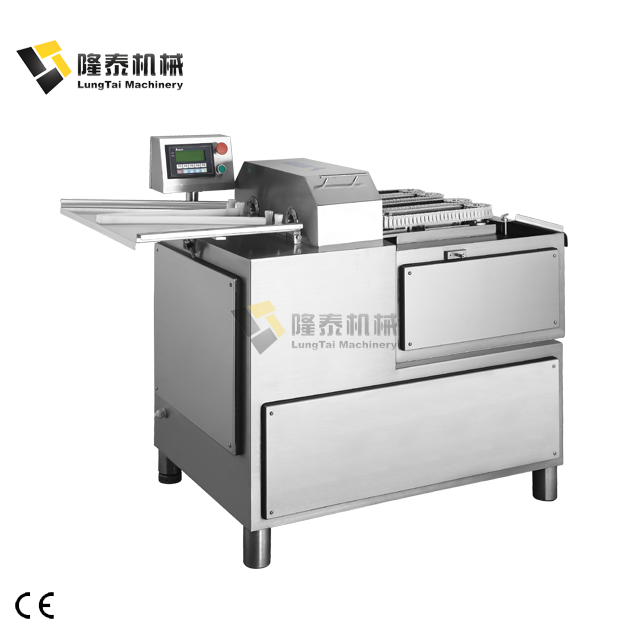
Proper installation is key to achieving great results with your integration. Even the most advanced equipment will not perform well if it is not set up correctly.
Site Preparation and Layout Planning
Processing machines should be installed on level floors with adequate drainage, as indicated by HACCP requirements. There should be at least one meter of space around the units for easy maintenance and for ventilation purposes.
Electrical and Pneumatic Setup Procedures
Both units will require connection to stable power sources complete with surge protection devices. Pneumatic lines supplying air pressure to the tying machine will be required and will be specified with a recommended rating to ensure consistent tie tension during operation.
Calibration and Trial Runs After Setup
Prior to adding meat mixtures run water based test runs to verify the accuracy of the synchronization of the filler’s discharge rate and the tie cycle frequency. Through the PLC interface the portion control parameters can be fine-tuned on the basis of the information received.
Preventive care during the first use ensures optimal operation of your fully integrated line in the long term.
Our strategy of daily disassembling contact parts and cleaning these according to the EU Regulation (EC) No 852/2004 for the hygiene of food businesses is sufficient to guarantee the level of hygiene required in order to guarantee food safety. The use of non-corrosive cleaning products suitable for stainless steel maintains the surface of the parts not damaged and extends their service life.
Change of the sealing rings, O-rings or cutting wires is recommended after 500 operating hours or according to manufacturer’s recommendations. Storing of spare drive belts, servo motors or encoder sensors guarantees a quick reaction in case of a breakdown, especially during peak times, when any failure could bring production to a complete standstill.
Inconsistent Portion Lengths or Loose Ties
As sausages may be of different size and ties seem to be loose, encoder feedback loops of the filler have to be readjusted in relation to the tie cycle timing.
Air Pockets in Sausages
If an air pocket is observed, a leak in the vacuum pump seals should be investigated to ensure proper suction strength for filling and compression.
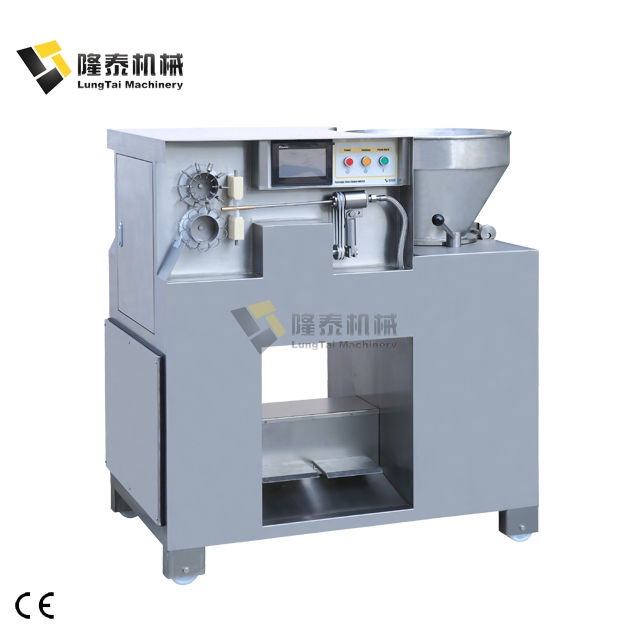
There are several real cases on how integrated solutions can bring tangible benefits to manufacturing. A medium-sized German manufacturer of packaged foods replaced his old filler with a high performance servo driven filler that can be equipped with an automatic tying machine. Thanks to the new installation, the plant’s output increased by 15% in terms of hourly output. In the article Food Processing Technology Review 2022, published by German media company Fair Distribution, also figures are provided on the cost savings due to integrated production lines. According to this data, such lines can save up to 20% on maintenance thanks to the more straightforward control system and fewer wear parts on moving parts.
LungTai Machinery (Jiaxing) Co., Ltd. support of Vacuum sausage fillers and Automatic tying machines has enabled a number of processors in the Asia-Pacific region to complete their processing lines. Their highly experienced engineering department carry out initial and detailed layout of the connected units to enable accurate mechanical alignment pre- and post-installation. LungTai Machinery (Jiaxing) Co., Ltd.’s engineers are able to log on to clients’ computers via secure communication channels to troubleshoot problems that may arise during production enabling the company to return to full production quickly. In addition the company carry out regular training sessions with operator enabling fine tuning of inter-machine synchronization to maximize production without the need for unnecessary down time.
Integrating a vacuum sausage filler with an automatic tying machine transforms traditional sausage production into a faster, cleaner, more consistent process. By addressing compatibility checks early on—mechanical fit, communication protocols, casing management—manufacturers achieve higher throughput with fewer rejects. Proper installation coupled with disciplined maintenance sustains reliability across long production cycles. Real-world results show improved ROI through reduced waste and labor needs. Working alongside experienced partners familiar with both technologies simplifies implementation while minimizing operational risks tied to mismatched equipment configurations.
Integration of filling and linking operations is key to efficient workflow management. It ensures the most accurate portioning, minimizes need for manual intervention, optimizes hygiene by minimizing human contact and maximizes line efficiency.
Yes. It depends on the size of the outlet, the communication protocol (e.g. CANopen), and the coordination of the motor speed. For minor modifications there are adapter kits available.
Typically one day for installation and commissioning including calibration. All preliminary site work to be completed i.e. setting up power lines etc.
Uneven sausage lengths, poor tying, uneven fill density are typical for inexact timing of discharge of filler head and the rhythm of the tie cycles.
Minor checks should be carried out on a weekly basis, however, a full preventive service including seal changes should be carried out every three months. This will depend on the total number of hours the machine is running per shift.
Do you need more
information?
You are welcome to contact us for further information about our company or products by filling in the form below.
Email: sales@lungtai.com
