

If you run a butchery or a restaurant kitchen, you know the routine all too well. The meat you serve needs to boast exceptional flavor, stay perfectly juicy, and ultimately drive strong profits for your business. Traditional marinating takes a lot of time. Sometimes it drags on for 20 to 40 days when making salted meat, and even for a few hours to a whole night for getting meat tender and flavorful before cooking. hours or even days. You often wonder if the flavor got in deep enough and if the yield will hold up.
A vacuum tumbler for meat changes that completely. It slashes processing time dramatically. The flavor sinks in deeper. And it delivers a significantly higher yield of usable product. For shops that handle fresh cuts, sausages, or ready-to-cook items, the switch makes a clear difference. The traditional approach relies on passive, time-intensive marination. The other uses vacuum pressure and gentle rolling to get the job done quicker. Let's look at both sides so you can see what might fit your daily operations better.
Imagine the usual scene. You prepare a big batch of brine or marinade in a large container. Then you add the meat and let it sit. Static brining or stirring everything by hand in a commercial meat mixer seems pretty simple at first. But it comes with a host of practical headaches for operators.
Flavor penetration stays mostly on the surface in the beginning. The time required for flavor to fully penetrate varies by meat type and curing method: it can take 6 to 24 hours for beef and pork, 2 to 6 hours for chicken, and using wet curing or injection curing can speed up the penetration process compared to dry curing. It takes at least 8 hours for the salt, spices, and other ingredients to work their way inside. In a busy butchery getting ready for the weekend crowd, that means coolers stay tied up overnight. Someone has to keep an eye on the batches at strange times. Absorption often turns out uneven too. Thicker pieces stay dry in the middle while the edges get overly salty.
Yield takes a hit as well. Without any mechanical action like tumbling, the brine cannot be evenly distributed in the meat, making it hard for the meat to fully absorb the brine. Meanwhile, the proteins in the meat cannot be effectively activated to form a network structure that locks in moisture. As a result, the meat loses moisture pretty easily during cooking. proteins. Labor costs mount as workers are required to stir or flip the trays repeatedly. When scaling up to meet the demands of a restaurant menu, minor inconsistencies emerge rapidly. You hear customer feedback about dryness or you notice more trim going to waste. While this method does fulfill its basic purpose, it proves to be slow, messy, and increasingly costly over prolonged use.
Now picture loading the meat into a vacuum marinating machine. The drum seals tightly, and air is extracted from within. The As the meat begins its slow tumble, the vacuum draws all components into cohesive contact. This reduced pressure creates tiny gaps within the muscle fibers, allowing marinade to rush in and penetrate areas that remain untouched by conventional soaking methods.
Consider a machine like the WGR120. Boasting a 120-liter capacity, it operates at a consistent 12 rpm. Its drum can be tilted from -36° to 90°, facilitating effortless loading and unloading. Equipped with a PLC system, the vacuum cycle operates autonomously. Simply input the required parameters, then shift your focus to other operational tasks. Rolling The internal bars gently massage the meat without tearing it apart. These bars can also be easily removed when switching between different products.
In practical use, you load 50 to 60 pounds of chicken thighs or pork loin into the machine, add your marinade, start the cycle, and then step away. Twenty to sixty minutes later — or up to a couple of hours for thicker cuts — the meat has pulled in much more liquid than a full day of traditional soaking ever could. According to relevant food science research, advanced methods like pulse vacuum tumbling can make meat absorb more marinade in a short time compared to traditional wet curing. The end result feels juicier, with better water retention and reduced cooking loss. The color looks better, presenting a more attractive appearance. And the weight you see after grilling or slicing tells a stronger story.
Real numbers make the comparison clear. Here is how the two approaches line up based on what operators actually experience in their shops.
Aspect | Traditional Static Brining or Manual Mixing | Vacuum Tumbling (like the WGR120) | Real-World Impact for You |
Processing Time | 12–48 hours | 30–120 minutes | Frees up fridge space and same-day prep |
Marinade Absorption | 4–8% typical | 25–30%+ in many tests | More flavor, less brine waste |
Cooking Yield | Baseline | 10–20% higher retained weight | Extra sellable pounds per batch |
Texture & Tenderness | Good but can be chewy or dry | Noticeably softer, juicier | Customers notice the difference |
Labor Required | Frequent stirring or flipping | Load, set, unload | One person handles multiple machines |
Consistency | Varies by batch and cut | Uniform every time | Easier menu planning and quality control |
The vacuum approach does more than just speed things along. It boosts your bottom line with better profit math. You’ll use far less marinade overall, as more of it penetrates and remains within the meat. Shorter refrigeration cycles translate to lower energy costs. That extra yield turns into cash in the register instead of loss in the waste bin.
Think about a medium-sized butchery on a busy Thursday. They need to prepare 200 pounds of brisket for weekend smoked specials. With the old brining method, the team starts the day before—far longer than the generally recommended 10 to 45 minutes for most beef brining, or 1-2 hours even for large cuts meant for braising. Not only do coolers fill up, but despite the overlong brining time, some pieces still come out under-seasoned.
Switch to a vacuum tumbler for meat, and while the specific time varies depending on factors like meat type, size, and brine formula, for fine-ground meat, the same amount can be finished in 1 to 2 hours, and larger cuts typically take 4 to 24 hours. However, with optimized processes, some can even finish in under an hour. Workers can move straight to portioning or grinding instead of watching tubs. Or consider a hotel central kitchen that handles 300 pounds of chicken every day for big events. Manual stirring in a commercial meat mixer keeps two people busy flipping and mixing for half the day, which stands in stark contrast to automated commercial meat mixers. As shown by the structure principle of such equipment, automated mixers are equipped with parallel shafts rotating in opposite directions with paddle-shaped blades, which can automatically shovel the meat on the wall to the center and mix the raw meat and auxiliary materials evenly through reciprocating operation. There are also ready-made automatic commercial meat mixers on the market, like the MWK32-80 model, which can realize automatic mixing and save a lot of manual labor.
The vacuum marinating machine runs batches on its own, which, like the full-automatic vacuum equipment in large food processing enterprises, helps save a lot of labor costs, allowing staff to focus on sauces and plating instead. Thanks to its working principle that enables meat to evenly absorb the marinade, flavor stays consistent in every bite. Moreover, it can enhance the water retention of meat, so the meat keeps its weight better on the steam table. Restaurants feel the benefit right on the plate too. A grilled steak that used to dry out after 15 minutes now stays moist longer. The marinade locked the juices deep inside. Guests come back more often. Waste drops. All of this comes from one solid piece of butchery equipment that pays for itself quicker than many expect.
The improvement comes down to basic mechanics, not tricks. The rolling motion gently works on the connective tissue. Vacuum removes air so liquid takes its place. Proteins bind together better. As shown in food technology research, during heating, myosin in meat will aggregate at around 43℃, form a bridge structure at about 55℃, and finally form a network structure at 60~70℃, which helps the meat maintain better water-holding capacity. So compared to the general 4%~24% weight loss of roasted meat products, this meat loses less weight when heat hits it. Texture turns tender without getting mushy. Flavor spreads evenly instead of sitting mostly on the outside.
Savings accumulate subtly yet steadily over time. You need less raw product per serving because each piece weighs more after processing. Labor hours decrease. Seasoning costs go down. In a shop that runs 500 pounds a week, those incremental gains translate into significant financial returns month after month. And the machine itself, like the 120L WGR120, fits most mid-volume setups without taking over half your floor space.
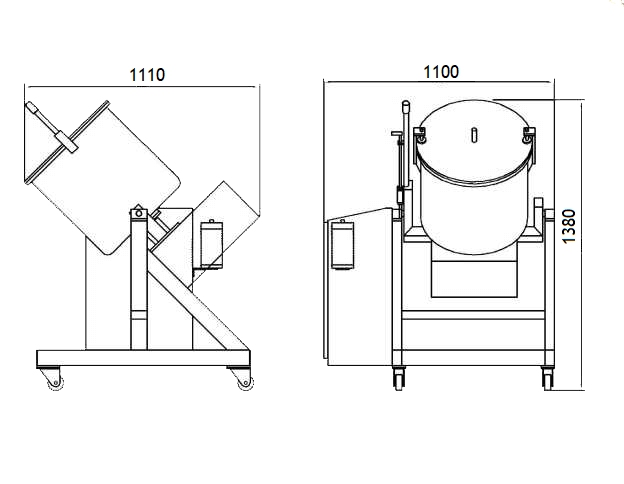
When you look for dependable butchery equipment, LungTai Machinery stands out as a manufacturer that understands the real demands of meat processing. The company began operations back in 2004 in Jiaxing, China. Over the years, it built a reputation for practical sausage and meat prep tools that hold up well in busy commercial kitchens. Their range includes fillers, peelers, lifters, bins, and more. But the Vacuum Marinating Mixer WGR120 really shines for operations that focus on marinating and tumbling. Just like similar vacuum tumbling machines, it can make the marinade be fully absorbed by the meat, enhance the meat's binding force and elasticity, improve the product's taste and section effect, enhance water retention and increase the yield. What's more, it can decompose the meat protein into water-soluble protein that is easy to be absorbed by the human body, and make the added materials fully integrate with the meat protein, so as to make the meat tender and improve the product quality. It can also save the marinating time, reduce the labor intensity of workers, and effectively reduce the raw material cost and labor cost.
This machine feels built for daily work. It uses sturdy stainless construction. The drum cleans easily. Controls stay simple enough that no one needs an engineering background to run them. LungTai designs these units for places just like yours — active butcheries, hotel kitchens, central commissaries, and restaurants that want speed without giving up quality. They ship around the world and offer straightforward support. If you have grown tired of gear that breaks down or fails to meet expectations, this kind of supplier ensures uninterrupted, smooth operations.
Vacuum tumbling beats traditional marinating in several clear ways, with professional research and practical effects supporting its advantages. It delivers better speed, higher yield, and more consistent flavor. According to relevant studies and practical applications, vacuum tumbling allows for deeper marinade penetration in much less time, as the vacuum environment relaxes muscle tissue and promotes faster absorption of the marinade. It also significantly enhances water retention, making the texture noticeably juicier, while increasing the product yield. Additionally, it improves the binding force and elasticity of the meat, ensuring a more stable product quality. Customers pick up on the difference right away. Whether you prepare steaks for the grill or sausage mix for the smoker, a vacuum marinating machine like the WGR120 turns a slow and unpredictable step into something quick and reliable.
The initial cost comes back pretty fast. For example, vacuum tumbling machines, a type of vacuum curing equipment, can enhance meat's water retention and binding capacity, increasing the product yield significantly. Meanwhile, they can tenderize the meat, improve its taste and appearance, making guests more satisfied with the food quality, which in turn helps the cost recover quickly. For any butchery or restaurant prioritizing quality and profit margins, it is not merely an additional expense but a strategic, forward-thinking investment.
What exactly is a vacuum tumbler for meat and how does it differ from a regular commercial meat mixer?
A vacuum tumbler for meat mixes gentle rolling with vacuum pressure. This combination pushes marinade deep into the muscle. A standard commercial meat mixer simply stirs everything at normal air pressure, only mixing the ingredients on the surface. The vacuum step, however, leverages the principle of physical impact in a vacuum environment to make the meat tumble, collide and tumble inside the equipment, opening up fiber gaps so flavor and moisture get absorbed faster and more evenly. This not only makes the meat more cohesive and elastic, but also enhances water retention and improves the slicing effect. It works great for chicken, pork, beef, fish and other cuts, and the marinating can be completed in a single 30-to-90-minute run, which is much more efficient than traditional marinating methods.
Can a vacuum marinating machine really improve meat yield enough to matter in a small butchery?
It can make a real difference. Many shops notice 10 to 20 percent more retained weight after cooking. The meat holds onto more of its natural juices plus the added brine. That extra yield translates into more product you can actually sell from the same starting amount. It helps your bottom line without forcing you to buy more raw meat.
How long does it actually take to marinate with a vacuum marinating machine compared to traditional methods?
Traditional static brining often runs 12 to 48 hours. With a vacuum tumbler, the brining time can be significantly shortened. For example, when used with a saline injection machine, beef can be fully brined in just 5 hours with a cycle of 15 minutes of operation and 15 minutes of pause. In general, for larger pieces of meat, the recommended brining time with a vacuum tumbler is 4 to 24 hours, while for finely minced meat, it can be shortened to 1 to 2 hours, and the time can be adjusted according to personal taste and meat type.marinating machine, most cuts finish in 30 to 120 minutes, which matches the common time range for short-term marination to make meat tender and flavorful as stated in relevant food preparation guidelines. You load it, set the timer, and come back later to meat that is ready for the next stage. This schedule fits nicely into same-day production for a restaurant or butchery.
Is the WGR120-style vacuum tumbler suitable for both small butcheries and larger restaurant kitchens?
It is highly suitable for operations of both scales. The 120-liter capacity handles 50 to 80 pounds comfortably per batch. That makes it flexible as your operation grows. The adjustable tilt, easy-to-clean drum, and straightforward controls work whether you process 200 pounds a day or scale up toward 500. It holds up seamlessly to daily heavy-duty use with zero complex maintenance.
Will switching to vacuum tumbling affect the final texture or make meat too soft?
When operated within the recommended time parameters, it consistently enhances the meat's texture. Its mechanical action delivers precisely the right amount of tenderization to ensure effortless chewing. It does not break down the structure too much. Most users say the meat comes out juicier and more flavorful while still keeping a nice bite. This is precisely the ideal texture and flavor profile that the majority of diners crave.
Do you need more
information?
You are welcome to contact us for further information about our company or products by filling in the form below.
Email: sales@lungtai.com
